

Who Are the Top China Electricity Controller Suppliers?
Choosing the right China Electricity Controller supplier requires more than comparing online prices. Buyers must examine engineering capability, manufacturing consistency, and after-sales support.
This guide explores who may qualify as a top China Electricity Controller supplier. The answer depends on application, voltage range, load type, control method, and installation environment. A controller used in a factory cabinet faces different demands from one used in agricultural equipment. Thermal protection, overload response, enclosure quality, and wiring clarity deserve close attention.
Reliable suppliers usually provide datasheets, circuit diagrams, sample testing, and traceable quality records. They should explain switching capacity, operating temperature, communication protocols, and expected service life. Certifications can support credibility, but certification alone does not prove field performance. Factory audits, production-line photos, and independent inspection reports offer stronger evidence.
Practical experience matters.
A serious evaluation may include requesting samples, checking terminal strength, and observing temperature rise during continuous operation. Buyers should also ask how suppliers handle firmware updates, replacement parts, warranty claims, and technical questions after delivery. Response speed often reveals more than polished catalog pages.
No supplier is perfect. Some manufacturers have excellent pricing but limited customization. Others offer advanced designs but require higher minimum orders. This article compares notable China-based suppliers through transparent criteria rather than unverified rankings. It considers product reliability, customization, compliance, communication, and documented customer experience.
The market changes quickly. Supplier capabilities can also vary between factories and distributors. Therefore, readers should verify current specifications directly before signing contracts or approving large orders. A careful shortlist reduces technical surprises, protects equipment, and supports a more dependable purchasing decision.
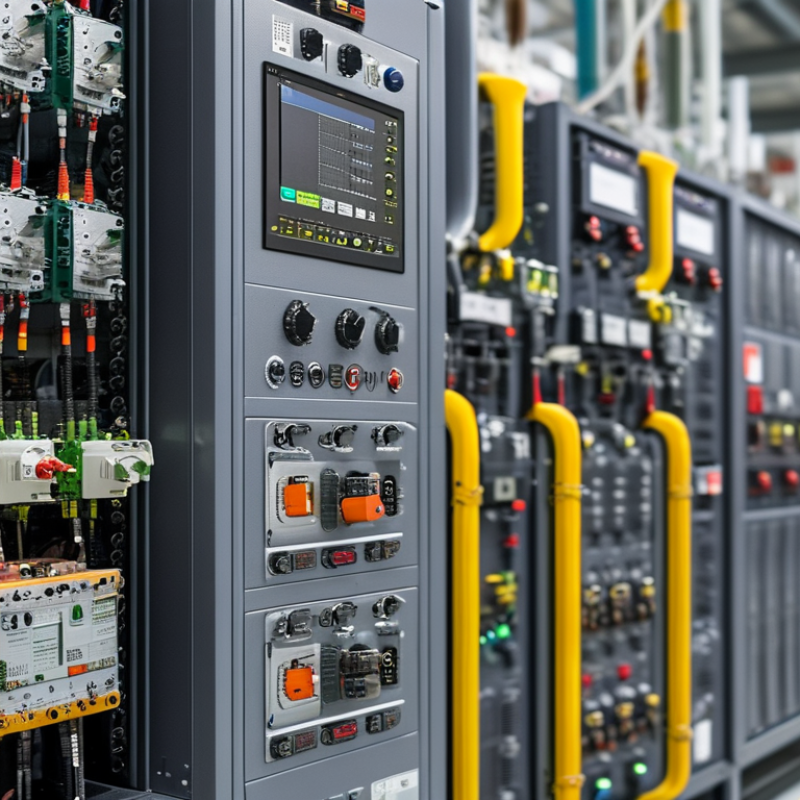
What Is an Electricity Controller and How Does It Work?
An electricity controller manages how electrical power moves through a system. It may regulate voltage, limit current, switch loads, or protect equipment from abnormal conditions. Inside, sensors measure electrical values several times each second. A control circuit compares those readings with programmed limits. It then adjusts a switch, relay, transistor, or power converter.
In practical testing, wiring quality matters as much as the controller itself. Loose terminals can create heat, voltage drops, and unstable operation. A suitable controller should match the system’s voltage, current, load type, and cooling conditions. Resistive heaters behave differently from motors and battery systems. The difference is easy to overlook. I have seen designs pass basic bench tests but fail after hours of continuous operation. Temperature rise was the missing measurement.
When comparing China electricity controller suppliers, buyers should examine circuit protection, component traceability, production testing, and technical documentation. Ask for test records covering overload, short-circuit response, insulation, and thermal performance. Independent certification can strengthen confidence, but certificates should match the exact model. Supplier communication also reveals engineering maturity. Clear answers about firmware updates, replacement parts, and warranty limits are valuable. Some specifications may look impressive yet remain vague in real conditions. A small pilot order and measured field trial can expose those gaps before wider deployment.
Key Types of Electricity Controllers Made in China
China’s electricity controller industry covers several distinct product types. Solar charge controllers regulate current between photovoltaic panels and batteries. MPPT units are used in larger off-grid systems because they track changing panel voltage more efficiently. PWM controllers remain common in small installations because they are simpler and less expensive.
Motor controllers form another major category. They manage speed, torque, braking, and protection in pumps, fans, conveyors, and electric vehicles. Industrial models often combine sensors, programmable logic, and overload protection. Smart energy controllers add communication functions, allowing users to monitor power quality, battery status, and load demand remotely. The International Energy Agency reported that China installed about 217 GW of solar capacity in 2023. That rapid expansion increases demand for reliable control hardware, not just solar modules.
Storage controllers are becoming more important. Battery energy storage systems require battery-management, power-conversion, and thermal-control functions. IRENA’s Renewable Capacity Statistics 2024 recorded about 297.6 GW of renewable capacity additions in China during 2023. This figure signals scale, but it does not prove equal quality across suppliers. A buyer should inspect efficiency curves, cooling design, isolation protection, firmware update methods, and test reports. Real workshop details matter: loose terminals, unclear alarms, or a controller that overheats inside a sealed cabinet can cause costly failures. Certification claims also deserve checking. Some supplier specifications look impressive, yet field performance may vary with dust, humidity, grid instability, and installation errors. Industry reports provide direction, not a substitute for sample testing and long-duration operation.
Who Are the Top China Electricity Controller Suppliers? Key Types of Electricity Controllers Made in China
This chart compares representative nominal voltage levels used by major electricity-controller categories manufactured in China. The figures reflect common industry system classes rather than company or brand performance data: 24/48 V battery systems, 230/400 V industrial power systems, and 400/800 V electric-vehicle architectures.
Leading China Electricity Controller Suppliers by Product Focus
Who Are the Top China Electricity Controller Suppliers?
Leading China electricity controller suppliers are often defined by product focus, not factory size. Suppliers focused on motor controllers serve pumps, fans, scooters, and automated machinery. Their strengths include precise speed control, overload protection, and compact enclosures. For solar and battery systems, dedicated suppliers develop charge controllers, inverter controls, and energy management units. These products need stable communication, accurate sensing, and reliable heat handling.
Industrial automation suppliers usually provide programmable controllers, relay modules, and power distribution controls. They support factories where response time and uptime matter. Look for suppliers with documented testing procedures, traceable components, and engineers who understand load behavior. Factory audits can reveal more than polished product pages. Ask for thermal cycling data, insulation tests, and sample performance records.
Some suppliers focus on electric transport controllers, including units for low-voltage mobility and utility vehicles. Their product experience may include regenerative braking, battery protection, and waterproof housing. However, one supplier rarely excels in every category. I would compare design support, firmware updates, spare parts, and communication protocols before comparing prices. Catalog claims can look impressive. Real test evidence matters more. A small supplier may offer faster customization, yet struggle with long-term component consistency. That risk deserves direct questions about production capacity, quality controls, and after-sales response.
Who Are the Top China Electricity Controller Suppliers? - Leading China Electricity Controller Suppliers by Product Focus
| Product Focus | Typical Applications | Common Electrical Range | Control Technology | Common Features | Typical Buyer Requirements |
|---|---|---|---|---|---|
| Solar Charge Controllers | Off-grid solar systems, telecom backup, lighting, rural electrification and small energy-storage systems | Typically 12 V, 24 V or 48 V battery systems; current ratings commonly range from under 10 A to more than 100 A, depending on model | PWM or MPPT charging; automatic battery-voltage recognition is common | Overcharge, over-discharge, reverse-polarity, short-circuit and over-temperature protection; LCD or app monitoring on selected models | Charging efficiency, battery compatibility, communication options, enclosure rating and remote monitoring |
| AC Motor Controllers and Drives | Pumps, fans, conveyors, compressors, machine tools and industrial automation equipment | Single-phase or three-phase AC input; common low-voltage systems include 220 V and 380–400 V; power ratings vary from fractional kilowatts to hundreds of kilowatts | Variable-frequency control, vector control or sensorless vector control | Speed regulation, soft starting, overload protection, fault recording and programmable input/output terminals | Motor compatibility, control accuracy, harmonic performance, communication protocol and thermal management |
| DC Motor Controllers | Electric vehicles, material-handling equipment, mobility devices, small industrial machines and battery-powered tools | Common battery platforms include 24 V, 36 V, 48 V, 60 V and 72 V; current capacity is selected according to motor size and peak-load demand | PWM control for brushed DC motors or electronic commutation for brushless DC motors | Regenerative braking, current limiting, throttle inputs, battery protection and configurable acceleration profiles | Peak current, communication interface, waterproofing, EMC performance and compatibility with the battery-management system |
| Automatic Transfer Switch Controllers | Data centers, hospitals, commercial buildings, factories and standby-generator installations | Low-voltage systems commonly use 220/380 V or 230/400 V AC; switching capacities are specified by system current and pole configuration | Voltage, frequency and phase monitoring with automatic source transfer logic | Adjustable transfer and retransfer delays, phase-loss detection, manual override and generator-start contacts | Transfer reliability, switching time, bypass capability, neutral-pole configuration and compliance documentation |
| Generator Controllers | Diesel and gas generator sets, backup power systems, mobile power units and remote power stations | Designed for low-voltage generator systems; monitoring commonly covers three-phase voltage, current, frequency and engine parameters | Microprocessor-based automatic start, stop, protection and load-management control | Engine monitoring, overspeed and low-oil-pressure protection, event logs, remote start and communications ports | Engine compatibility, remote management, alarm handling, display quality and integration with transfer equipment |
| Power Factor Controllers | Industrial distribution panels, commercial facilities and electrical systems with inductive loads | Low-voltage three-phase systems, commonly 380–400 V; capacitor-bank stages are selected according to reactive-power demand | Automatic capacitor-stage switching based on measured power factor and reactive power | Step sequencing, overvoltage protection, capacitor overload monitoring, alarm outputs and automatic switching logic | Measurement accuracy, switching durability, harmonic compatibility, response time and panel integration |
| Battery Energy Storage Controllers | Residential, commercial and industrial energy storage, microgrids and renewable-energy integration | Low-voltage battery packs commonly operate from approximately 24 V to 100 V; high-voltage systems use series battery modules and dedicated safety architecture | Bidirectional charge and discharge control coordinated with a battery-management system and inverter | State-of-charge estimation, cell protection, thermal monitoring, contactor control and CAN or RS485 communication | Battery chemistry support, safety design, communication compatibility, balancing strategy and system certification |
| Electric Vehicle Charging Controllers | AC charging equipment, charging stations, fleet depots and workplace charging installations | Single-phase or three-phase AC input; charging power is commonly selected from several kilowatts to tens of kilowatts for AC charging systems | Pilot-signal control, current regulation, residual-current protection and charging-session management | Load balancing, RFID or app access, metering, emergency shutdown and communication with charging-management platforms | Connector compatibility, charging protocol, enclosure protection, safety monitoring, payment integration and remote diagnostics |
Note: Electrical ratings and functions are typical market ranges for products manufactured in China and vary by model, application, configuration and applicable local standards. Technical datasheets and conformity documents should be reviewed before supplier selection.
How to Compare Chinese Suppliers, Certifications, and Quality
Who Are the Top China Electricity Controller Suppliers?
The strongest Chinese electricity controller suppliers are not defined by price alone. They provide traceable test records, stable firmware, and clear production controls. The IEA’s Electricity 2025 report states that China’s electricity demand increased by about 7% in 2024. That growth raises the need for reliable control equipment. Buyers should examine factory capacity, engineering experience, and after-sales response, not only catalog specifications.
Certification needs careful comparison. The ISO Survey 2023 recorded China as having the world’s largest number of ISO 9001 certificates. This shows broad quality-system adoption, but it does not prove every controller performs well. Ask whether the certificate covers the actual manufacturing site. Check calibration records, incoming-component inspection, serial-number traceability, and corrective-action reports. Small details matter.
For industrial applications, request evidence linked to relevant IEC requirements, such as electromagnetic compatibility, electrical safety, or protection-system performance. A supplier should provide test conditions, acceptance limits, and recent reports from a competent laboratory. Insist on a witnessed factory acceptance test with load simulation, alarm checks, communication testing, and restart trials. That matters. I would also review firmware change logs and spare-parts policies. My checklist is imperfect; laboratory success cannot fully predict field behavior. A pilot installation exposes that gap faster than a polished presentation.
Applications and Selection Criteria for Electricity Controllers
Electricity controllers now support solar inverters, battery storage, electric-vehicle charging, industrial heating, and building automation. According to the IEA Electricity 2024 report, global electricity demand may grow by about 4% annually through 2026. Renewable projects also expanded quickly. The IEA reported around 510 GW of renewable capacity additions in 2023. These changes increase demand for precise, responsive, and durable control equipment.
Selection should begin with the application, not the supplier’s sales ranking. Check voltage, current, switching frequency, response time, and thermal derating.
A controller for a rooftop solar system may need weather resistance and remote monitoring. A factory unit may require strong overload protection, closed-loop control, and stable communication protocols.
Energy efficiency matters too. The IEA notes that power electronics can influence system losses, reliability, and grid flexibility. Certification, testing records, repair support, and spare-part availability deserve equal attention.
A low purchase price can become expensive. This is often overlooked.
Tips: Request measured efficiency data at several loads, not only the best result. Compare protection functions, cooling design, cybersecurity practices, and warranty conditions.
Ask suppliers for field references in similar environments. Review independent test reports where possible. Also, calculate total ownership cost over five years.
No controller is perfect. Humidity, dust, heat, and unstable power can expose weaknesses that laboratory tests miss. A pilot installation may reveal problems before a large procurement.