Top 10 Benefits of Using Die Casting Mold for Your Projects?
Die casting is a widely used manufacturing process that brings several advantages. One of the key components in this process is the "Die Casting Mold." This essential tool shapes molten metal into precise specifications for a variety of applications. Various industries utilize die casting molds for everything from automotive parts to household items.
The benefits of using die casting molds are significant. They enhance production efficiency, reduce waste, and improve product durability. This method allows for intricate designs and tighter tolerances. However, it's important to note that not every project may require a die casting mold. The initial costs can be high, and imperfections in design can lead to complications.
Overall, understanding the advantages and challenges of die casting molds helps businesses make informed decisions. Balancing costs with quality is crucial. By identifying specific project needs, businesses can leverage the full potential of die casting molds.
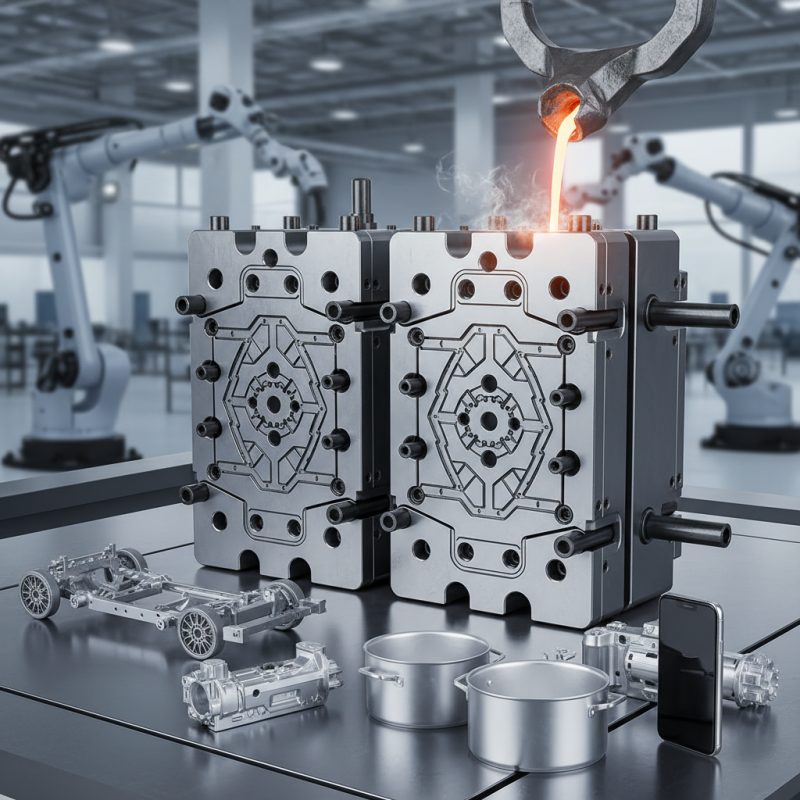
Advantages of Die Casting Molds in Manufacturing Processes
Die casting molds offer significant advantages in manufacturing processes. They allow for high precision and uniformity in the produced parts. This precision is crucial for industries requiring tight tolerances. Additionally, die casting can produce complex shapes that traditional methods struggle to achieve.
One notable benefit is the speed of production. Die casting molds enable faster cycle times compared to other methods. This efficiency can lead to reduced labor costs and quicker turnaround times. However, it's essential to consider the initial investment in mold creation. The upfront costs can be high, especially for intricate designs.
Durability is another key advantage. Die cast parts are typically stronger than those made using alternative techniques. This strength contributes to less material waste, promoting sustainability in manufacturing. Yet, achieving optimal results requires careful design and engineering. Investing in experienced professionals for mold design is vital to ensure long-term success.
Top 10 Benefits of Using Die Casting Mold for Your Projects
| Benefit | Description |
| High Precision | Die casting molds provide high dimensional accuracy, allowing for complex shapes. |
| Rapid Production | Molds enable fast production cycles, significantly reducing lead times. |
| Material Efficiency | Die casting minimizes waste, making the process more sustainable and cost-effective. |
| Repeatability | Once a die is created, it can produce thousands of identical parts consistently. |
| Mechanical Properties | Products made with die casting typically have superior mechanical strength and structural integrity. |
| Post-Processing Reduction | The precision of die casting reduces the need for further machining or finishing processes. |
| Material Versatility | A wide range of metals and alloys can be used, including aluminum, zinc, and magnesium. |
| Complex Geometries | Molds can create intricate shapes that are difficult to achieve with other manufacturing methods. |
| Cost-Effectiveness | While initial costs are higher, the efficiency and longevity of molds lead to lower costs per unit over time. |
| End-Use Quality | Parts produced have excellent surface finishes and can often meet strict industry standards. |
Enhanced Precision and Detail in Die Casting Applications
Die casting has emerged as a leading manufacturing process that instills enhanced precision and detail in various applications. This technology allows for intricate designs and tight tolerances, which are crucial for producing high-quality parts. By utilizing die casting molds, manufacturers can achieve exceptional surface finishes. This quality becomes especially important in industries like automotive and electronics, where even minor defects can lead to significant failures.
The accuracy of die casting molds stems from their ability to replicate complex geometries with great fidelity. This precision minimizes the need for extensive post-processing, saving both time and resources. However, achieving such accuracy does require skill in mold design and manufacturing. Designers must meticulously consider aspects like temperature control and mold material to ensure optimal results. Mistakes in these areas can lead to issues, highlighting the importance of expertise in die casting applications.
Moreover, while die casting molds offer many advantages, they are not without challenges. The initial investment in high-quality molds may be substantial. Additionally, the process can be less flexible in adapting to design changes compared to other methods. Companies must weigh these factors against the benefits to determine if die casting is the right fit for their projects. Ultimately, a deep understanding of the process and careful planning are essential for success in die casting applications.
Top 10 Benefits of Using Die Casting Mold for Your Projects
Improved Production Efficiency with Die Casting Techniques
Die casting is a technique that enhances production efficiency significantly. By using high-quality molds, manufacturers create precise parts quickly. This reduces cycle times and increases output. Faster production means lower labor costs and a quicker turnaround for projects. Workers can focus on other tasks while the die casting process runs smoothly.
Consider these tips for optimizing your die casting projects. Maintain your molds regularly to ensure they perform effectively. A well-maintained mold can prevent defects and prolong its lifespan. Monitor the temperature and pressure closely during the casting process. Small adjustments can lead to better results.
It’s important to note that not every project will benefit equally. Some may require alternative methods. If you encounter consistent issues, re-evaluate your design choices. Sometimes, simpler designs can yield excellent results with die casting. Experimenting with different materials can also unveil unforeseen advantages, leading to better efficiency and cost savings.
Cost-effectiveness of Die Casting Molds for Large-Scale Projects
Die casting molds offer significant advantages for large-scale projects. Their cost-effectiveness stands out. Though the initial investment can be high, the overall savings over time are remarkable. For manufacturers, this means lower unit costs as production increases. Each mold can produce thousands of parts, allowing for more efficient resource use.
Additionally, the durability of these molds plays a vital role. They withstand high temperatures and pressures, which results in less frequent replacements. This reliability can reduce maintenance expenses. Nevertheless, it’s crucial to consider the design complexity. A poorly designed mold may lead to defects, increasing costs and compromising quality.
Using die casting molds also encourages innovation. Engineers can experiment with various materials and designs. This flexibility is valuable in meeting specific project requirements. However, it requires careful planning and expertise. Even experienced teams can face challenges in optimizing die designs. Balancing cost and quality is key, yet it is often a learning process for companies investing in this method.
Versatility of Materials Used in Die Casting Processes
Die casting is a process admired for its material versatility. Several metals can be utilized, making it an ideal choice for many industries. Aluminum, zinc, and magnesium are among the most popular materials. Each offers unique characteristics. Aluminum, for example, is lightweight yet strong, making it perfect for automotive parts. Zinc has excellent moisture resistance, which benefits outdoor applications.
The choice of material can significantly impact the final product's quality. Different alloys can enhance durability and reduce the weight of components. For projects requiring fine details, high-pressure die casting offers remarkable precision. However, the initial setup costs for molds can be high, which is something to consider. It’s essential to evaluate whether the benefits outweigh these costs for your specific needs.
Complex shapes are achievable with die casting, yet this flexibility doesn’t come without challenges. Adjustments to designs may be necessary due to material constraints or mold capabilities. It’s an ongoing learning process for engineers and designers alike. Balancing material selection with design requirements is crucial to the project's success.