
2026 Best Types of Paper Pulp Making Machines?
Choosing the best paper pulp making machine in 2026 requires more than comparing capacity figures. A modern mill may handle recycled cartons, office paper, agricultural fibers, or mixed waste. Each feedstock behaves differently inside the pulper, screen, refiner, and dewatering line.
Dr. Wolfgang Bauer, a paper and pulp technology specialist, offers a practical reminder: “The right machine is the one that performs consistently under real mill conditions.” That principle shapes this guide. A high-speed hydrapulper may suit large recycled-paper plants, while a compact batch pulper can better serve smaller operations. Some mills need advanced contaminant removal. Others need lower energy use and simpler maintenance.
The strongest choice depends on fiber quality, production volume, water availability, and labor skills. It also depends on what the machine will face every day. Wet cardboard clumps. Plastic strings wrap around rotors. Fine screens clog when cleaning is neglected.
Small details matter.
This article compares the leading types of paper pulp making machine for 2026, including hydrapulpers, drum pulpers, refiners, screening systems, and dewatering equipment. It considers operating experience, technical performance, maintenance access, energy demand, and lifecycle cost. Manufacturer claims will not be treated as complete evidence. Mill trials, service records, and verified specifications deserve attention.
There is no perfect machine. Some recommendations may change as recycled fiber quality, energy prices, and automation standards develop. That uncertainty is worth admitting. A careful buyer should test assumptions before signing a purchase order.
What Is Paper Pulp Making Machinery?
2026 Best Types of Paper Pulp Making Machines?
What Is Paper Pulp Making Machinery?
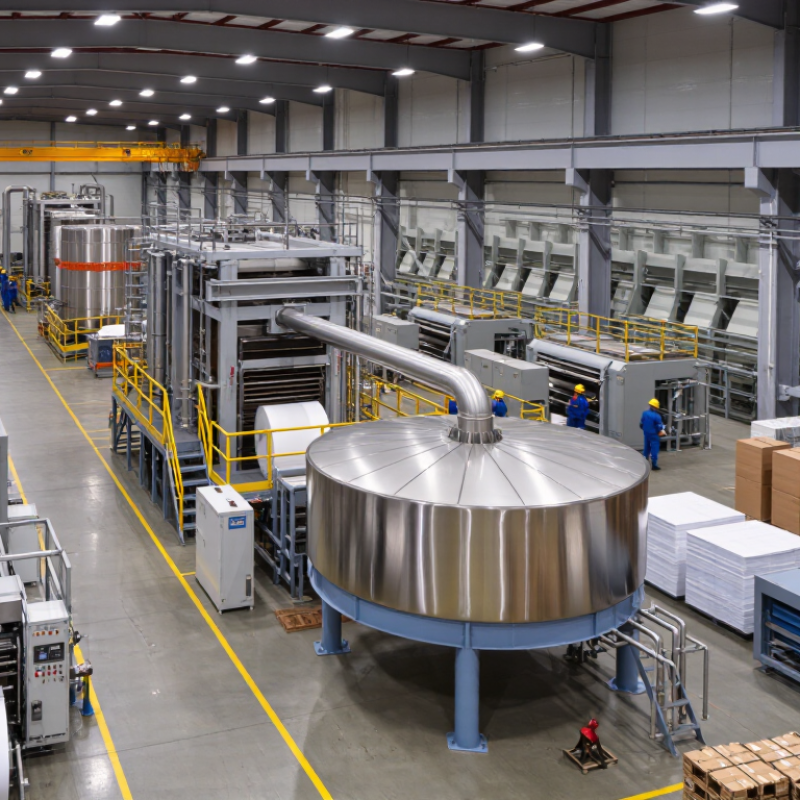
Paper pulp making machinery is a connected group of machines that turns waste paper, wood fiber, or plant fiber into usable pulp. The process begins inside a pulper, where water and raw material are mixed with rotating blades. The mixture may look rough and uneven at first. That is normal.
Screens remove plastic, staples, sand, and oversized fiber pieces. A deflaker then separates fiber bundles and improves pulp uniformity. Agitators keep the pulp moving inside storage tanks. Thickening equipment removes excess water, while pumps transfer pulp between processing stages. Each machine affects fiber quality, energy use, and production stability.
In practical operation, operators should check consistency, temperature, vibration, and screen pressure every shift. Small changes can signal blockages or worn components. I have found that cleaning schedules are often underestimated. A machine may still run, yet produce weaker pulp because residue has built up inside.
The best equipment depends on raw material, required pulp quality, factory size, and water conditions. Recycled office paper needs different treatment from corrugated fiber or agricultural residue. Automated controls can improve accuracy, but they cannot replace inspection. Some settings still require judgment. Overlooking that human step can create avoidable problems.
How Different Types of Pulp Machines Work
2026 Best Types of Paper Pulp Making Machines?
Paper pulp machines work through different fiber-separation principles. Mechanical pulp systems grind wood under pressure and heat. They retain more lignin, producing bright, bulky sheets with lower energy demand for chemical recovery. However, the fibers can weaken over time. Chemical pulping uses cooking liquor to dissolve lignin. Kraft-style systems create stronger fibers, but they need digesters, washing equipment, and chemical-recovery units. The U.S. Forest Service reports that chemical pulp remains important for packaging and printing grades because fiber strength affects product durability.
Recycled pulp lines begin with a drum or hydrapulper. Rotating blades loosen waste paper in water. Screens remove plastics, wires, and oversized fragments. Cleaners then separate heavy particles, while flotation cells lift ink and sticky materials. The European Recovered Paper Council reported that recovered paper supplies more than half of the fiber used by Europe’s paper industry in recent years. That figure explains the growing demand for deinking systems, but recycled fibers become shorter after repeated processing. Quality drops. Sometimes, unexpectedly.
Refiners adjust fiber flexibility before the stock reaches the forming section. Disc refiners increase bonding, while screens control fiber length and consistency. A 2023 FAO forestry statistics release placed global paper and paperboard production above 400 million tonnes annually. At this scale, machine selection should match raw material, water quality, energy costs, and target paper grade. A catalog choice may still fail in a wet mill. Pilot testing remains necessary, and operators should question optimistic yield claims.
Key Features of the Best Pulp Making Machines in 2026
The best pulp making machines in 2026 are designed around stable fiber quality, efficient water use, and simple maintenance. In practical mill trials, consistent feed control often matters more than maximum motor power. A reliable machine should accept varied raw materials without causing frequent blockages or uneven refining.
Modern systems need precise control panels with real-time readings for pressure, temperature, flow, and energy consumption. These details help operators adjust production before defects spread through a full batch. Automated screening can remove plastics, metal fragments, and oversized particles, while adjustable refining settings protect fiber length. Clean pulp matters.
Energy efficiency is another key feature. High-efficiency motors, heat recovery, and closed-loop water circulation can reduce operating costs and wastewater volume. However, lower energy use should not weaken pulp strength. That trade-off deserves scrutiny. A quieter machine with fewer vibration points may also improve workplace safety and extend component life.
Maintenance access is easy to overlook. Machines with removable screens, visible inspection ports, and standard replacement parts usually reduce downtime. Hygienic construction is valuable when pulp quality must remain consistent across long production runs. No machine is perfect. Operators should test samples, review service records, and compare actual output with supplier claims before making a purchase. A well-documented trial remains more trustworthy than impressive specifications alone.
| Machine Type | Primary Raw Material | Typical Production Capacity | Typical Operating Consistency | Main Process Function | Key Features for 2026 | Typical Power Considerations | Best-Fit Applications |
|---|---|---|---|---|---|---|---|
| Hydrapulper | Recovered paper, cardboard, office paper, and mixed paper stock | Approximately 10–1,500 air-dry tonnes per day, depending on vat size and stock quality | Usually 3–6% for batch or continuous pulping | Disintegrates paper in water and separates usable fibers from coarse contaminants | Variable-speed rotor Automated consistency control Ragger and junk-trap options Wear-resistant vat components | Power demand varies widely with furnish, pulping time, rotor design, and contaminant load; energy-efficient rotor profiles can reduce specific power use | Recycled containerboard, newsprint, tissue, and writing-paper lines |
| High-Consistency Pulper | Recovered corrugated containers, mixed office waste, and difficult recycled grades | Commonly about 100–1,000 air-dry tonnes per day in medium and large systems | Typically 12–18% | Processes recovered paper at high consistency to improve fiber release and reduce water circulation | Lower dilution demand Reduced contaminant fragmentation Automatic dilution control Condition monitoring | Often lowers overall water-handling and screening loads, although rotor power can be substantial during startup and heavy contaminant conditions | High-throughput recycled board and packaging-paper mills |
| Fiber Separator | Repulped recovered paper containing plastics, foils, stickies, and coarse debris | Approximately 50–800 air-dry tonnes per day | Often 3–5% at the feed, with dilution or thickening used around the separation stage | Separates usable fibers from lightweight and heavy contaminants after pulping | High reject capture Low-fiber-loss rotor design Reject-rate monitoring Quick-access maintenance areas | Specific energy depends on screen gap, reject content, and required fiber quality; optimized separation can reduce downstream refining demand | Deinked pulp, recycled packaging grades, and mills using highly contaminated recovered paper |
| Pressure Screen | Mechanical pulp, chemical pulp, recycled pulp, and partially cleaned stock | Roughly 50–1,200 air-dry tonnes per day per screening line, depending on screen area and furnish | Commonly 0.8–4.5% | Removes oversized particles, shives, plastics, and other contaminants according to screen-slot or hole size | Fine-slot screening Rotor pulse control Differential-pressure sensors Automatic reject-rate adjustment | Efficient rotor hydraulics and stable pressure control help reduce energy per tonne while maintaining screening selectivity | Bleached pulp, recycled pulp, tissue stock, and high-quality printing-paper furnish |
| Disc Refiner | Wood pulp, recycled pulp, agricultural fibers, and other cellulosic fiber suspensions | Approximately 20–1,000 air-dry tonnes per day per refiner, depending on refining duty | Usually 2.5–5.0% | Develops fiber bonding ability, fibrillation, drainage behavior, and final paper strength | Automatic gap control Load-based refining Segment monitoring Energy-per-tonne tracking | Refining is one of the largest electrical loads in a paper mill; modern control systems minimize over-refining and unnecessary motor load | Packaging board, tissue, fine paper, specialty paper, and recycled-fiber quality improvement |
| Twin-Roll Press | Washed, screened, or bleached pulp requiring dewatering and transport preparation | Commonly about 100–1,500 air-dry tonnes per day | Feed consistency is often 2–5%; discharge consistency can reach approximately 30–45%, depending on pulp and operating conditions | Removes water from pulp before storage, bleaching, drying, or shipment | High dewatering capacity Automatic nip-pressure control Filtrate recovery Low water carryover | Can reduce thermal drying requirements and wastewater volume; actual savings depend on incoming consistency and target dryness | Market-pulp preparation, pulp bales, and mills with limited evaporation or drying capacity |
| Screw Press | Wastepaper rejects, pulp-mill sludge, deinking residue, and fibrous process waste | Typically about 1–30 tonnes of dry solids per hour, depending on feed type and dryness target | Feed consistency commonly ranges from 1–8% | Thickens and dewaters fibrous rejects or sludge to reduce disposal volume | Automatic back-pressure control Enclosed operation Reduced odor and spillage Solids-content monitoring | Usually has lower electrical demand than thermal drying; performance is strongly affected by fiber content, ash, and polymer conditioning | Wastewater-sludge handling, reject treatment, biomass preparation, and landfill-volume reduction |
| Chemical Pulp Digester | Wood chips, bamboo, bagasse, and other suitable lignocellulosic chips | Batch systems may process tens to several hundred air-dry tonnes per day; continuous systems can exceed 1,000 air-dry tonnes per day | Chip and liquor conditions vary by process; the wood-to-liquor ratio is commonly controlled to maintain uniform cooking | Uses heat and chemicals to remove lignin and release cellulose fibers | Automated H-factor control Liquor-ratio monitoring Chip-level control Heat-recovery integration | Steam and chemical-recovery efficiency are major operating factors; heat integration can significantly reduce overall energy consumption | Virgin kraft pulp, sulfite pulp, dissolving pulp, and integrated paper mills |
| Bleaching Tower and Mixing System | Washed chemical pulp, mechanical pulp, or recycled pulp requiring brightness improvement | Often designed for approximately 100–2,000 air-dry tonnes per day | Typically 8–14% in medium-consistency bleaching stages; high-consistency systems may operate at higher levels | Mixes pulp with bleaching chemicals and provides controlled reaction time and temperature | Precise chemical dosing Brightness feedback Short-retention-time mixing Closed filtrate management | Water, steam, oxygen, peroxide, and chemical consumption depend on target brightness and incoming pulp quality; process control helps avoid overdosing | Bleached kraft pulp, tissue, office paper, high-brightness board, and deinked pulp |
| Pulp Drying Machine | Washed and bleached pulp intended for market-pulp bales or dry-fiber storage | Approximately 100–2,000 air-dry tonnes per day | Wet-end stock is commonly below 5%; finished pulp is generally dried to about 88–92% dry solids | Removes water using forming, pressing, and thermal drying before cutting and baling | Heat-recovery systems Moisture-profile control Automatic sheet threading Bale-quality inspection | Thermal energy is the dominant factor; exhaust-air recovery, condensate reuse, and optimized press dryness improve efficiency | Market pulp, specialty fiber, export pulp bales, and mills without an integrated paper machine |
How to Choose a Paper Pulp Making Machine
Choosing a paper pulp making machine in 2026 requires more than comparing prices. Start with the raw material: recycled office paper, corrugated boxes, or mixed waste behave differently in water. A batch pulper suits changing materials and modest production. A continuous pulping system fits stable, high-volume operations. Inspect the feed opening, rotor design, and screen size. These details affect fiber quality, reject levels, and cleaning time.
Measure your real production demand, not an optimistic target. If the line must process five tons daily, check whether the machine can maintain that rate for several hours. Ask for power consumption, water use, pulp consistency, and noise data. A lower purchase price may hide expensive motors, frequent screen replacement, or complicated maintenance. Keep spare parts accessible. Your technicians should understand the control panel without calling an engineer every time.
Automation can improve consistency, but it cannot repair poor material preparation. Confirm whether the machine includes dilution control, impurity removal, and overload protection. Visit an operating facility if possible. Watch the pulp flow and listen for unusual vibration. Small problems often appear before manuals mention them. No calculation is perfect. Leave capacity for seasonal waste changes, but avoid buying a system far larger than your current workforce can operate. That balance is difficult, and it deserves careful testing before payment.
Maintenance, Efficiency, and Sustainability Considerations
2026 Best Types of Paper Pulp Making Machines: Maintenance, Efficiency, and Sustainability Considerations
In 2026, the best pulp-making machine is not simply the fastest one. Selection depends on fiber quality, production scale, energy use, and maintenance access. Continuous digesters suit large kraft mills with stable feedstock. Batch digesters offer more flexibility for changing wood types. Refiner systems need precise plate control, while modern screening equipment reduces fiber loss through better reject separation.
Maintenance is where efficiency becomes measurable. Vibration sensors can detect bearing wear before a refiner stops unexpectedly. Temperature monitoring helps identify lubrication problems near motors and gearboxes. Operators should inspect screen baskets, seals, dilution lines, and scraper blades during scheduled shutdowns. Small failures often increase steam, water, and electricity consumption. A perfect maintenance plan does not exist. Dust, corrosion, and rushed repairs still create blind spots.
Sustainability also depends on measurable operating data. CEPI’s 2023 Key Statistics reported a European paper recycling rate of 79.3%. That figure increases pressure on mills to process variable recovered fibers without excessive rejects. High-efficiency screens, closed-loop water systems, and adjustable refining controls can support this goal. The American Forest & Paper Association reported a 60.7% paper recovery rate in the United States during 2023. However, recycled fiber is not automatically low-impact. Excessive refining can shorten fibers and raise power demand. Mills should track fiber yield, steam consumption, water reuse, and downtime together, rather than celebrating one impressive number.
Related Posts
-
How to Choose Side Stream Filtration for Your Heating System Efficiency
-

Top 10 Innovations Transforming the Pulp and Paper Industry for a Sustainable Future
-

What are the Best Practices for Paper Pulp Production in 2026?
-
How to Make High Quality Paper from Wood Pulp?
-
Top 10 Hydrogen Purification Systems for Global Buyers?
-

How to Choose a UV Ballast Water Treatment System in 2026?